
“My only real fear was when I was in NASCAR. At the start of the race my heart would thump, but only because I didn’t want to hurt anyone else. I could care less if I got hurt or died…oh, and I’m afraid of snakes.”
Stan Barrett
You’d have to be under a rock (no pun intended) to not see the predominant story line from the 2026 Rockingham Speedway weekend. Honestly, it’s not the story we wanted to cover, but it is the story we were presented with. We prefer to focus on what happens on the track. Sometimes to understand that however, you have to look at events that happen well before the haulers even leave the shop. Especially in this case. You see, the top tier NASCAR brass have a bit of a conundrum on their hands. And truthfully, in many ways, it’s one of their own making. As a matter of fact, it goes to a decision made by that contingent prior to the 2016 NASCAR Cup Series season. A decision made however to stem the results of decisions made from the very beginning of the organization. Now that goes much deeper then we can touch here, so we’ll focus on NASCAR’s transition to the charter system. Done to stabilize the sports economics for teams that compete at NASCAR’s highest level, and to give the team’s a stake in the series long term business growth. It did not stem the lawsuit that defined that stake, and it also had the negative impact of significantly stifling any new team growth into the sport at the highest level. So much so, that one of NASCAR’s generational legacy drivers, Dale Earnhardt Jr., at least so far, doesn’t see how he could even have the means to put a full time team on the circuit. That statement alone should give you an inclination of the challenges of starting a new Cup Series team for anyone but the extremely financially advantaged.
For many younger generation fans, this seems normal. The top pro sports organizations all operate on the franchise model. But, American auto sports is unlike any other sports. As it should be. And NASCAR is finding out that it can’t structure itself like those other sports and retain what it was originally intended to be. Ah, the challenges of taking an outlaw sport and shaping it into a shiny polished top tier professional organization. That not only took a lot of work, it took a lot of capital as well. And, most importantly, to keep the machine running smoothly as it grew into one of the world’s most popular sports organizations with control. Control that often left it’s competing teams scrambling for themselves to make ends meet on their end. And so sponsors emerged. The dependence on sponsors became, and is, enormous. Bigger teams got bigger sponsors making it even tighter for the “little guy”. But as sponsorship got tighter, the economics for the big teams felt the pinch as well. The roost had come to nest, and so NASCAR made the change. The result? No longer can you build a team on knowledge, craftmanship, ingenuity, and skill with meager assets. Gone were the days when a team got in on speed. Gone were the days when a team could show up and a lap time in qualifying got them into the field. And born were the days when a driver had to start early in not only developing their skills, but they had to become marketing machines as well, able to draw for themselves the money to race. For better or worse, it’s led to driver development systems that are set up to protect the industry from the inside. A concession to the teams that carried the manufacturer’s banners through NASCAR’s golden age. But at the detriment of anyone from the outside trying to get in, team and driver alike. So when Cleetus McFarland (Garrett Mitchell), decided to chase his dreams of becoming a stock car driver at the highest level, the question emerged from many of the sports insiders – Does Mitchell belong on a race track competing against drivers that spent their lives crafting not only the skills to compete at the highest level, but also to say, do, and look the part of the professional drivers they’d become?
There are two sides to that argument really. And both are legitimate. And I, fortunate enough to have seen first hand the golden era of NASCAR, and the end of the era that proceeded it, now have a great first hand look at the next generation. Our visit to Rockingham Speedway this past Saturday gave me a chance to put it all in perspective and come to a conclusion that both sides will eventually have to come to accept.
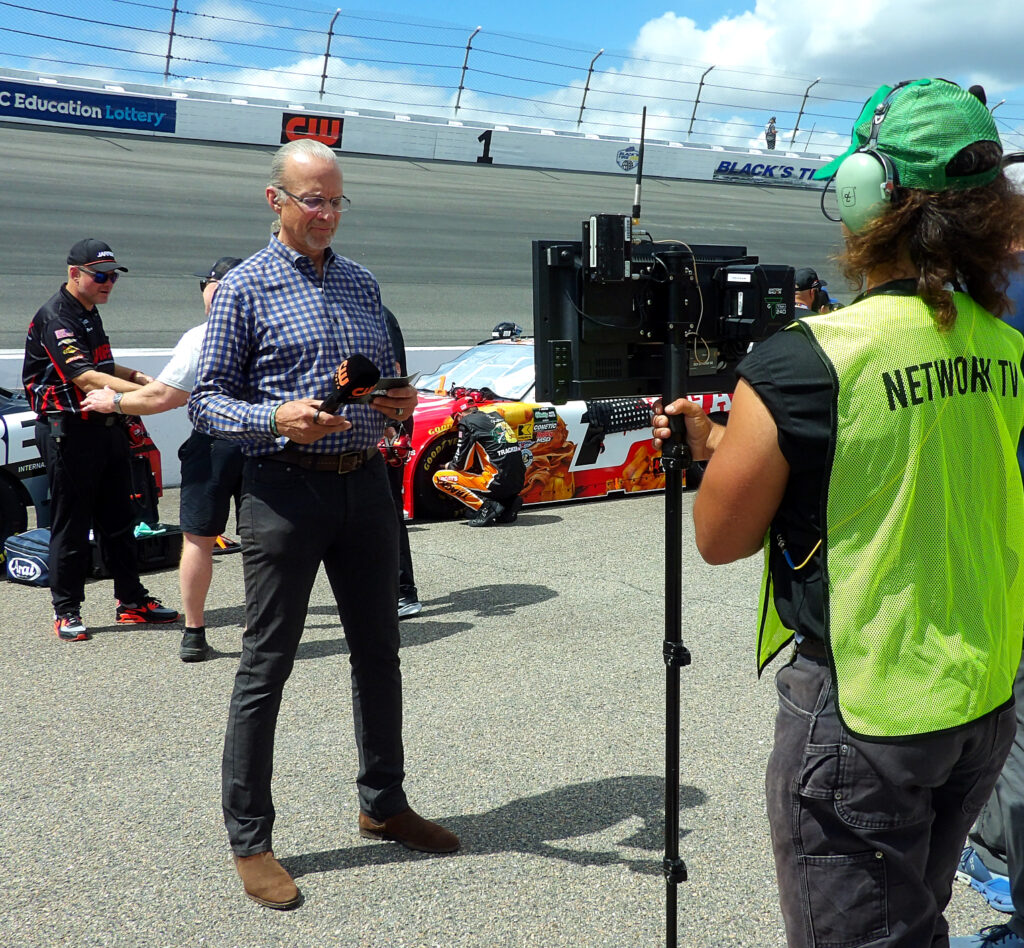
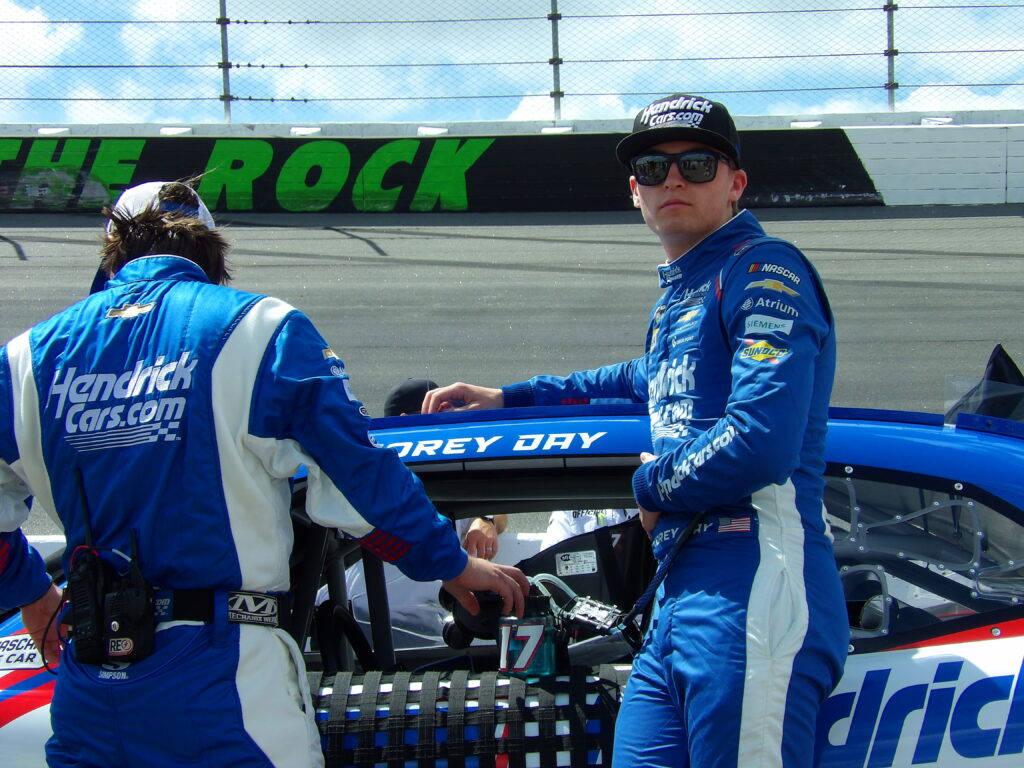
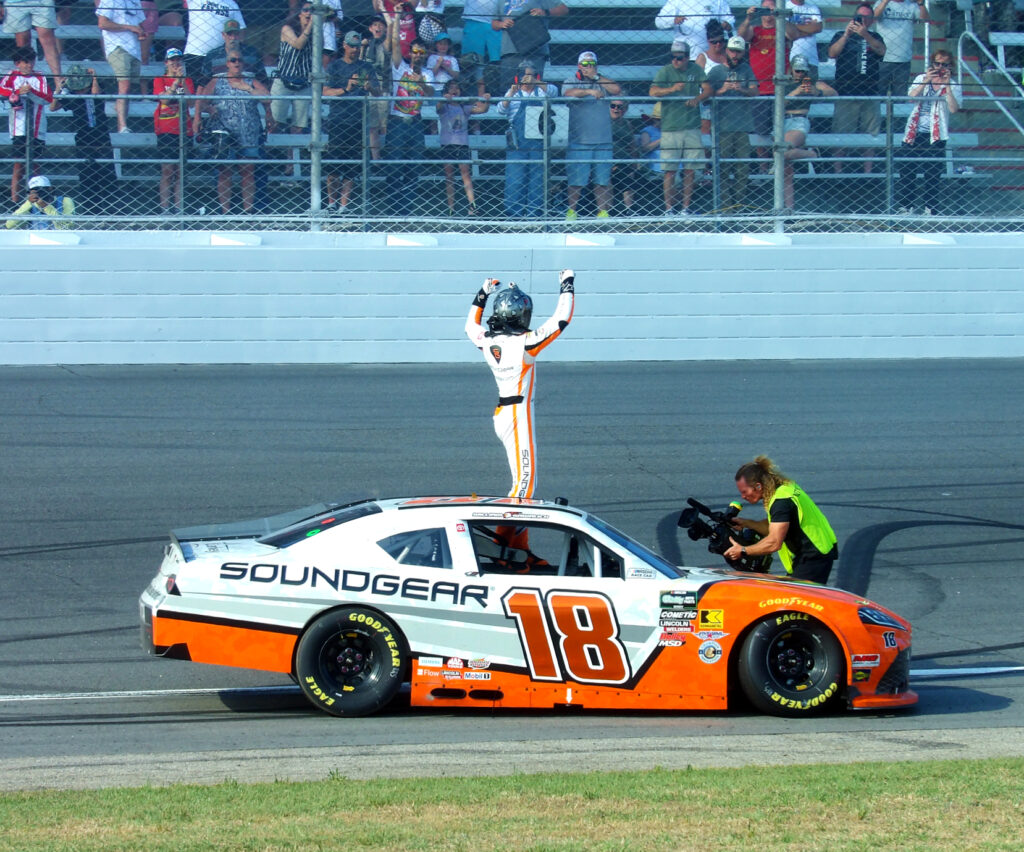
Rockingham Speedway opened in 1965. Curtis Turner won the inaugural race in a season that marked his return to NASCAR after he was banned for trying to form a driver’s union. At that time, manufacturers had factored into the equation, hence leading to rules that prohibited certain non production engines, significantly effecting the competitive landscape of the then named Grand National Series. It signaled a new era of American stock car racing. An era that would lead the sport to new heights. In 1972, Rockingham Speedway, originally North Carolina Speedway, changed ownership and was in the hands of NASCAR team owner L.G. DeWitt. An owner that fielded cars for the likes of Elmo Langley, LeeRoy Yarbrough, Benny Parsons, and Joe Millikan. He became one of the sports first millionaires. By 1981 he had to close up his racing shop due to a lack of funding. By the time he died in 1990, Rockingham was a signature staple on the NASCAR schedule. But after 2004, it had been left for dead by NASCAR as they moved to “larger” markets. Despite the great racing at what had become an amazing facility, it wasn’t good enough for NASCAR and their design for the future. NASCAR was moving away from it’s roots for “greener” pastures.
Now truthfully, what I need to say here is that from the very beginning, Big Bill France had a vision. And he was the man to do it. Don’t take my word for it. I’ve talked to those in the industry who were there at the beginning, and they all said the same thing. Everybody wanted the sport, born in the fields of the south by moonshiners who wanted to show the others that THEY were the best, to grow into the very best racing organization that it could be. They knew how popular it would become, but Bill France had a vision that even left them in awe. From the very beginning, at places like an old hickory tree on the property of Bill Blair’s house in High Point, North Carolina, he laid out his vision. By the time Daytona International Speedway was built, people outside of that group of moonshiners and early drivers began to understand the enormity of that vision, and that it would become much more than just a dream. At the same time, France knew he had to control every bit of it. As any big business comes to realize, growth and expansion has it’s own unique set of challenges. By the time Bill France was lost, the sport was becoming as big as it gets. Today, the sport is trying to take a step back and remember where it all started. But the challenges are no less.
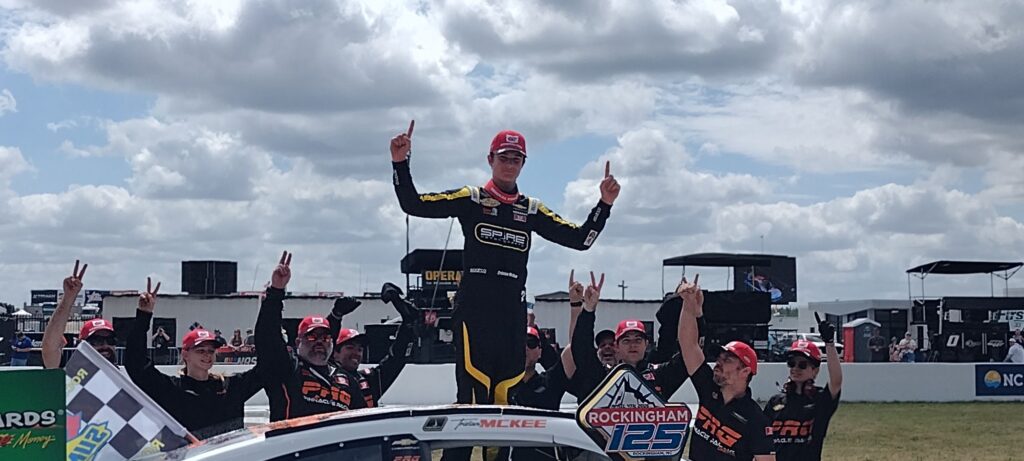
Charters, though a move to help the teams grow financially as the sport moves to it’s future, have also significantly changed the competitive landscape. It now must remember that is not a stick and ball sport. Though financial security is needed for the teams, it must also be structured in a way that insures growth and doesn’t stifle it. That means new teams should have a clear and obtainable path. That also goes to it’s competitors, the drivers themselves. The youth of the sport and the talent they possess should not be underestimated. These guys start competing at ages that surprise older era fans from my generation. Therefore, the truth is that the competition is better than it’s ever been. Here at Short Track Report, we saw both William Sawalich and Tristan McKee win Late Model races early in their career at ages many think kids shouldn’t even compete. But we recognized the drivers in the driver development programs’ talent. As many know we have been strong advocates for what this means for the sport. And what we said is playing out in real time right now. These young drivers will become known as one of the most amazing generation of drivers of all time. Laugh at me now, but mark my words, they are that good.
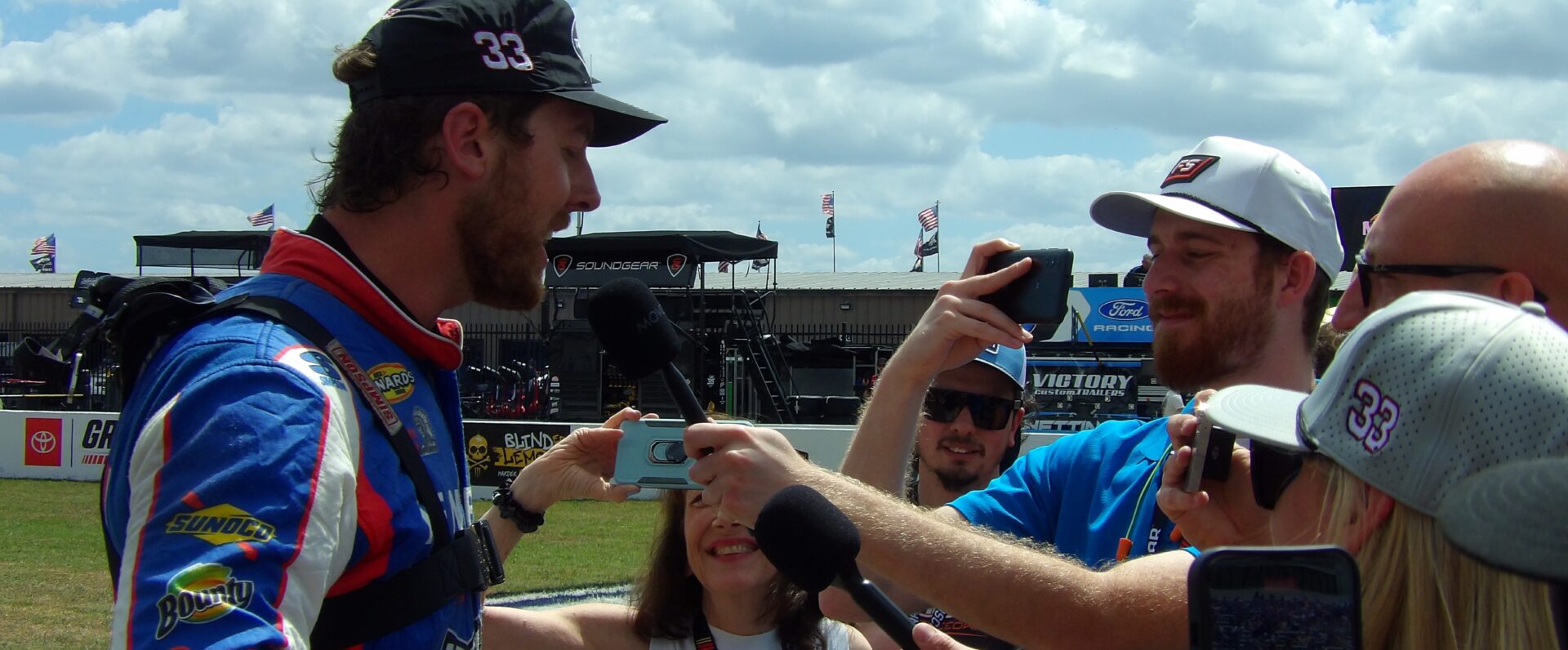
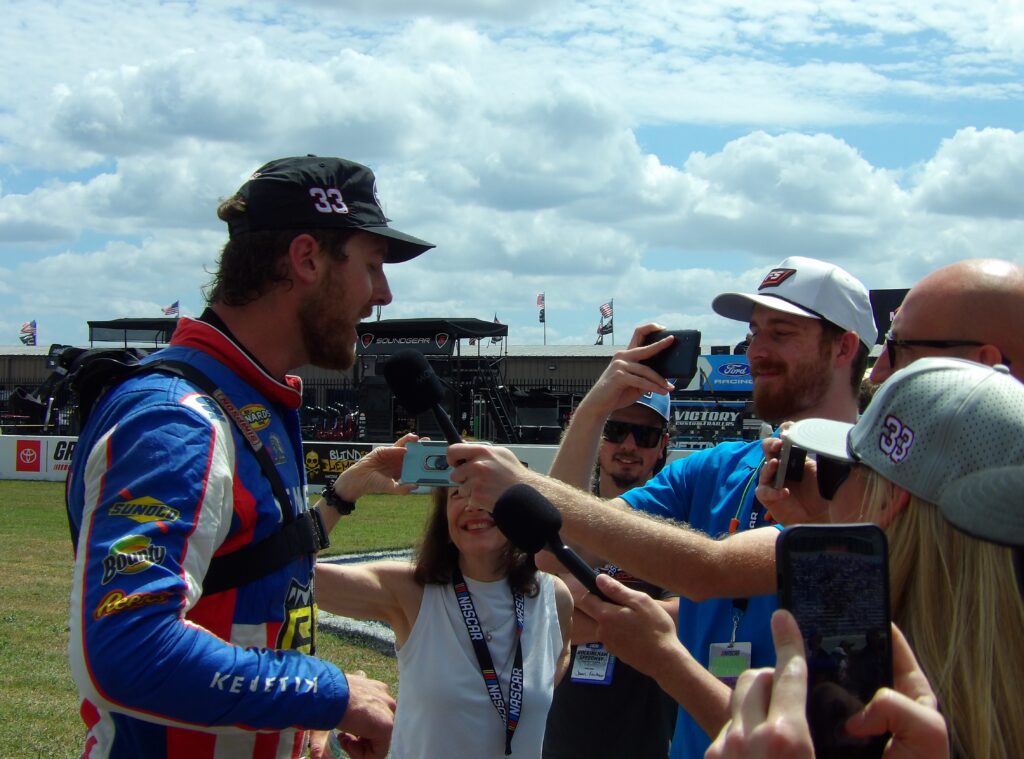
Now that said, I’m going to throw an even more shocking fact to you. Shocking at least to those in the industry that have placed themselves in a glorious, professional little bubble. The sport is better competition wise than it’s ever been. But, at the same time, the fans want someone they can connect with. Someone that they can relate too. Even the younger generation fans know what I’m speaking about. The product placement, the perfect interviews…It all seems disingenuous. Enter one Cleetus McFarland. Yes, he’s a social media sensation using a moniker for a name. To the consummate industry professional, he seems to be what’s disingenuous. But the fans know better. That’s where the conundrum lies. And I couldn’t have put both sides of the argument better than what I heard from Parker Kligerman on the dilemma. He laid out both sides perfectly when he said: “The fan in me thinks it’s great! The race car driver in me asks what is our standard for experience? I think there’s an element of…you have to get a standard of it doesn’t devalue the Jesse Loves, the Austin Hills, the Justin Allgaiers who’ve dedicated their lives to get to this moment. They’ve gone through the ranks, they’ve done all the prerequisites. They’ve got the funding together and fought their way to be in this position, and to not have someone come in and kind of devalue from that and what they’ve put into the sport.”
Now I went to Rockingham this year thinking to myself, I’ll just let that whole thing take care of itself. But then that series of comments from Kligerman hit me like a ton of bricks. This goes deeper than I wanted to realize. I’ve heard this argument before. But it was about a track. Bowman Gray Stadium. Yes, it relates. Bowman Gray was and is the very first NASCAR weekly racing track. It still operates on the principle that the first drivers in the sport implied. And it is still the highest attended weekly racing track in the nation. I’ve heard every argument against it’s existence right down to it’s not real racing. But the fans know better. It comes down to passion. You won’t find it any greater anywhere else in auto racing than at Bowman Gray and that’s why it’s fan attendance rivals every series except the Cup Series itself. FACT. Because Bowman Gray Stadium is a place that demands of you passion or you won’t survive it. You either learn to respect the sport there for what it is at it’s core, or you don’t make it. The fans there don’t care about what your level of professionalism is, it comes down to the show on the track.
Cleetus. Does he belong? He brings fans and attention. But that’s not enough. Great, yes, but not enough, at least in the long run. If Cleetus wants to compete at the highest levels of NASCAR he has to respect the sport. If he does, his passion will dictate his work ethic. And from what I saw, he seems to have that respect. And although he finished 32nd after a 33rd place qualifying effort, I’d seen that before. And by people that have plenty of experience. Until he proves otherwise, he definitely deserves his shot. And he’s a personality that the sport needs. The caution here though is that the sport truly is as tough as it should be. Performance will ultimately decide how far he goes in the industry and determining his place in the history books, as it has for every driver that came before him. And that shouldn’t be taken lightly by those that will follow his path. Not all will succeed. As a matter of fact, very little. For Garrett Mitchell, if he puts in the dedication he’s shown in reviving the Freedom Factory (formerly historic DeSoto Speedway), he will not only not be a liability, he could be a true asset. Imagine that. The social media sensation with the fake name teaching a lesson in credibility. Until next time, as always, See You At The Track!

178 Post in our HUB Storage

 Billy Weatherman
Leave a Reply